File it from the yard.
Get back to the story.
You report in your own language, from wherever the story is. Your words and photographs reach the desk in one go, and the decision comes back to your phone.
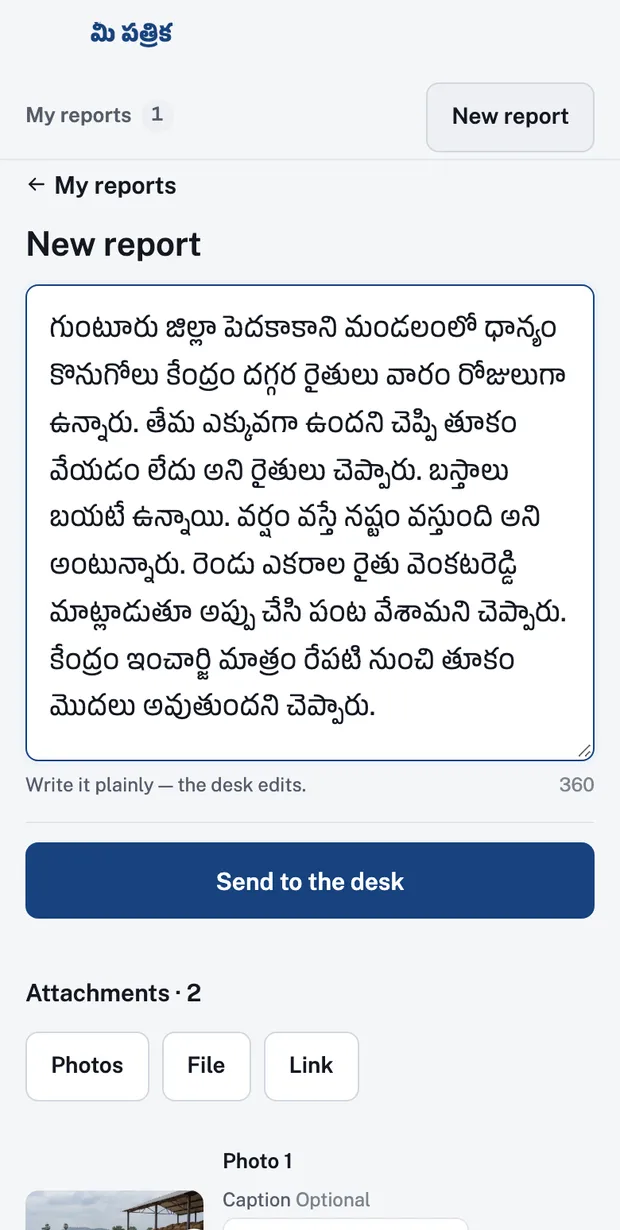
Write it the way you’d tell it.
In any language, on your phone, plainly. The desk does the editing. Add your photographs and send. Nothing to install from a store: you sign in with your number.
It reaches your desk, whole.
The report goes to the desk your newsroom set for your area, with your photographs exactly as you took them.
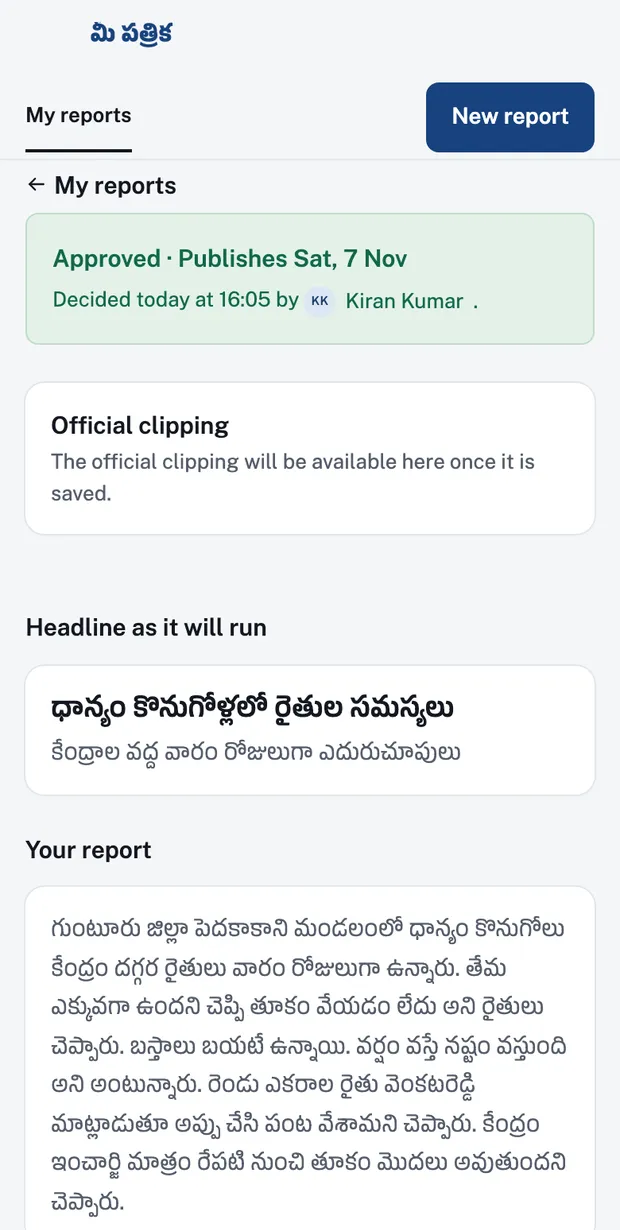
The decision comes to you.
Your phone shows the story approved, who decided and the headline it will run under, with your own report kept beneath it.
The clipping is yours to share.
Once the desk saves it, the official clipping sits on your report, ready to send on.
What stops
- The ‘did you get it?’ call to the desk.
- Photographs shrunk on their way in.
- Searching old chats for last month’s stories.
What stays yours
Your report stays exactly as you filed it, beside whatever the desk does with it.
Prefer to talk it through? Tell the story to Claude or ChatGPT and send it to the desk from there.
The real product on a sample newsroom. The story, the people and the masthead are fictional. Whether reporters see the desk’s decisions is your newsroom’s setting. Screens show a sample newsroom in Telugu.